The CESAM project concludes its work in Toulouse, which was dedicated to promoting sustainable innovation and the circular economy in the agri-food sector of the Mediterranean Pyrenees region
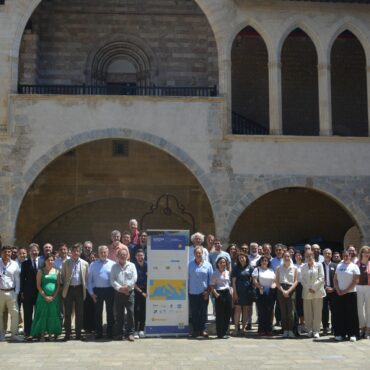
Institutional representatives, experts, and companies from the Occitanie region, Catalonia, and the Balearic Islands gathered to present CESAM’s results, discuss the future of the agri-food sector, and recognize the most innovative initiatives developed by participating SMEs
On Thursday, July 2, 2026, the Cité de Toulouse hosted the Sustainable Agri-Food Innovation Day, the closing event of the European CESAM project, led by the Pyrenees-Mediterranean Euroregion. CESAM has funded 20 projects from 31 participating companies with a grant of 900,000 euros and has a total budget of 3,022,935 euros, 70% of which is funded by the European I3 Instrument.
This event brought together institutional representatives, experts, companies, and stakeholders from the innovation ecosystem of Occitanie, Catalonia, and the Balearic Islands with the aim of accelerating the transition toward a more sustainable, circular, and innovative agri-food model.
The official opening was led by Yannick Jauzion, regional councilor for the Occitanie / Pyrenees-Mediterranean Region, and Xavier Bernard Sans, secretary general of the Pyrenees-Mediterranean Euroregion. Both highlighted the importance of cross-border cooperation in addressing the sustainability challenges of the agri-food sector and strengthening innovation among partner territories. The event continued with a presentation by Virginie Perron, project manager at EISMEA (Executive Agency of the European Innovation and SME Council), who outlined European funding opportunities for small and medium-sized enterprises, with a special focus on the I3 Instrument, which supports interregional innovation projects.
The program also included a conference dedicated to the sustainable future of the agri-food sector, which brought together experts from the three regions to discuss the challenges and opportunities related to building a more resilient, competitive, and environmentally friendly agri-food system. The main topics addressed were:
- The circular economy and new development opportunities for agri-food SMEs.
- Innovation and digitalization as drivers of transformation in the sector.
- European funding and instruments to support interregional innovation, particularly the I3 Instrument.
- Interregional cooperation between the Occitanie region, Catalonia, and the Balearic Islands as a driver of innovation..
Participants in this session included Cécile Picollet (OcciMore program), María Francisca Parets (Agri-Food Cooperatives of the Balearic Islands), and Carles Gasol (Inèdit Innova), who shared their perspectives on the circular economy, innovation, and the transformation of the agri-food sector.
This was followed by a roundtable discussion featuring members of the CESAM consortium: Pierre Camps (Pyrenees-Mediterranean Euroregion), Pascal Mouy (AD’OCC), Marina Calvo (Fundació Bit), Nicolas Nguyen The (Agri Sud-Ouest Innovation), Martí Morató Hil (Go Zero Waste), and Didier López (NEWTIMES Ingénierie). The discussions provided an opportunity to take stock of the project’s achievements and explore prospects for cooperation among the three participating regions.
The event also featured presentations by SMEs supported by CESAM, which gave pitches on the 16 circular solutions developed as part of the project. These initiatives illustrate the potential of companies to offer innovative solutions in the areas of the circular economy, sustainability, and digitalization throughout the entire agri-food value chain.
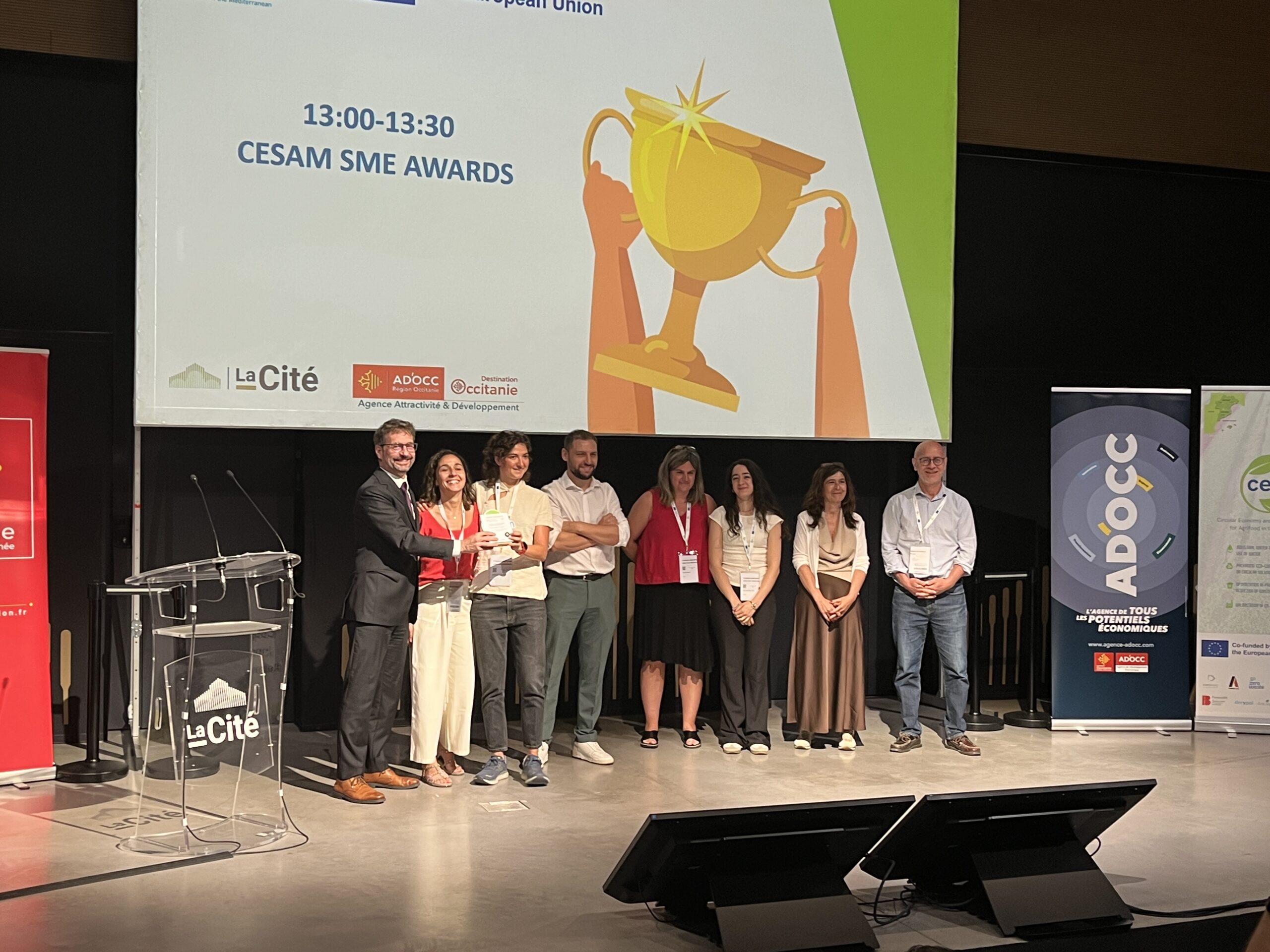
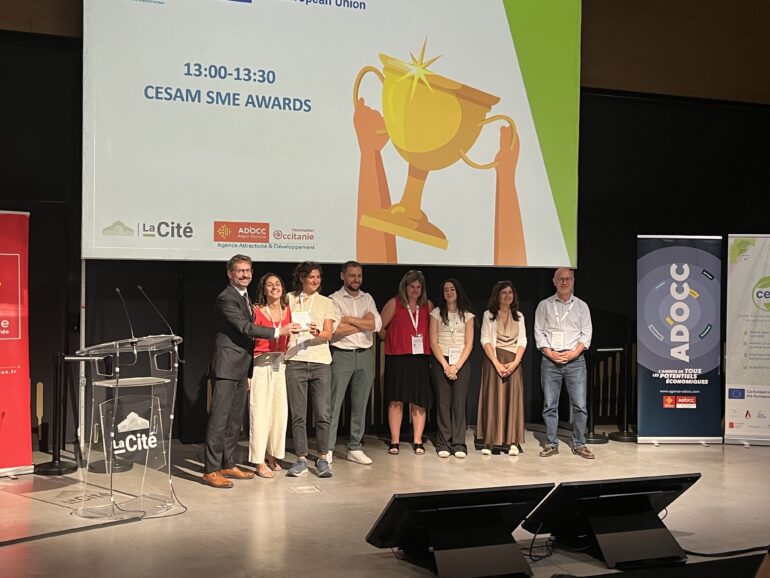
The event concluded with the presentation of the CESAM Awards, which recognize the project’s most outstanding initiatives:
- Best Innovation Award: B’ZEOS and Terracor
- Best Environmental Impact Award: FertiByPro Bio
- Best Market Potential Award: FoodSensing 4CE
- Best Solution Award (Audience Choice Award): Asclepios Tech
The Sustainable Agri-Food Innovation Conference also served as a prime opportunity for networking among companies, institutions, and innovation stakeholders. It fostered new collaborations and the exchange of knowledge with the aim of continuing to develop a more sustainable agri-food ecosystem in the Pyrenees-Mediterranean region.
Press notes CAT | FR